
Every blog post on this topic tells you the same thing. Write helpful content. Use clear headings. Add schema markup. Hope for the best. We’ve been testing this for the last eight months across service-business clients, and most of that advice is either wrong or missing the real playbook. Ranking in ChatGPT is not an SEO problem dressed up in new clothes. It’s a citation and brand-mention game, and the businesses winning it are doing things you won’t find on page one of Google.
Here’s what we’ve actually seen move the needle.
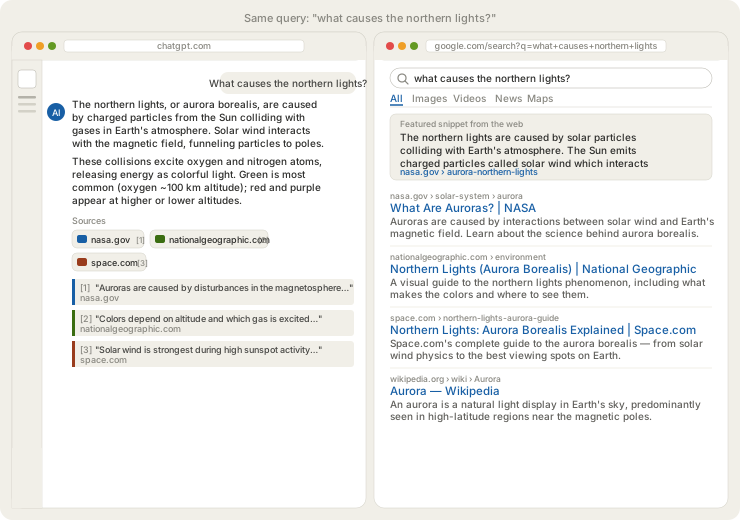
The “just write good content” advice is mostly cope
Read any article on this topic and you’ll get some version of the same five bullets. Use natural language. Answer questions clearly. Structure your content with headers. Add FAQ schema. Write for humans, not search engines.
None of that is wrong. It’s also not enough. We have clients whose blog content is genuinely excellent, ranking in the top three on Google for their target keywords, and ChatGPT still won’t cite them. Meanwhile, a random Reddit thread from 2022 gets pulled into the answer. If content quality alone were the lever, that wouldn’t happen.
ChatGPT, Perplexity, Google’s AI Overviews, and the rest of the generative-answer layer don’t rank pages. They synthesize answers by pulling from a handful of sources they already trust to have the right information. The question isn’t “is my content good enough to rank.” It’s “does this model already know my brand exists, and has it seen my brand associated with the topic in enough places to feel safe citing me.”
That’s a completely different game. And for service businesses (plumbers, law firms, medical practices, electricians), it’s a game most agencies don’t know how to play yet.
Start with what the models can actually see
Before any of the tactical stuff, check the boring infrastructure. A surprising number of service-business sites are accidentally blocking the crawlers that AI models use to build and update their knowledge.
The two to check first:
- GPTBot (OpenAI’s crawler for training and answer generation)
- OAI-SearchBot (OpenAI’s live search crawler for ChatGPT’s browsing mode)
Open your robots.txt file. If you see Disallow: / under User-agent: GPTBot, you’re telling OpenAI not to crawl your site. We’ve found this on about one in four service-business sites we audit, usually because a developer added it years ago when everyone was paranoid about AI scraping. If ranking in ChatGPT matters to you, remove it.
Perplexity uses PerplexityBot. Google’s Gemini pulls from Google’s regular index plus Google-Extended (which you can opt in or out of separately from regular Googlebot). Anthropic’s Claude uses ClaudeBot and anthropic-ai. You want them all allowed.
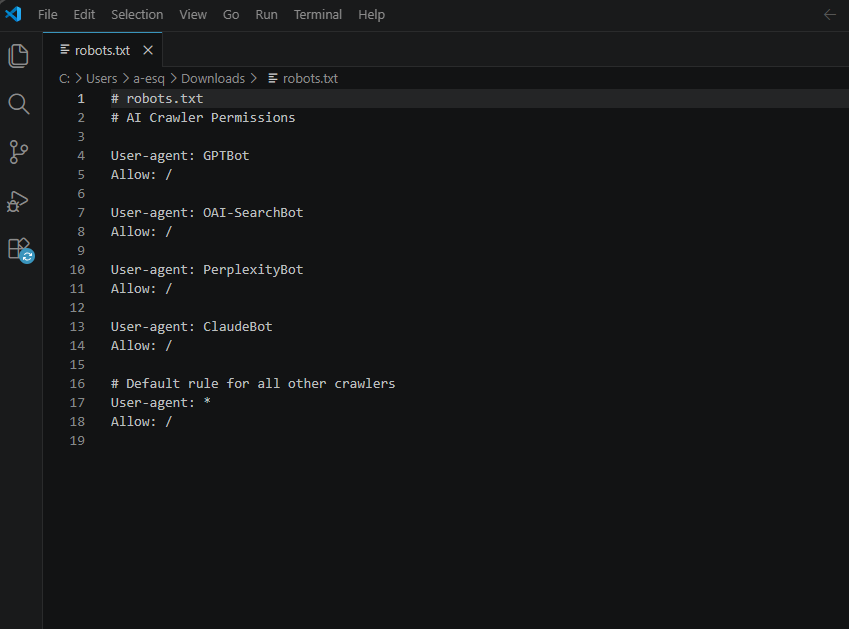
One more thing worth checking. Some security plugins (we’ve seen this with Cloudflare’s “Block AI Scrapers” toggle and a handful of WordPress security stacks) will silently block these user agents even when robots.txt is clean. Pull your server logs or use a tool like Cloudflare’s Bot Analytics to confirm the crawlers are actually getting through. Fix this before you do anything else. No citation strategy works if the models never get to see your page.
The thing nobody writes about: brand mentions without links
This is the single biggest difference between traditional SEO and generative engine optimization.
Google’s algorithm rewards backlinks. A link from a high-authority site passes ranking signal. That’s been the game for 25 years.
ChatGPT doesn’t work that way. What moves the needle in generative answers is brand mentions, linked or not. If ChatGPT is answering “best personal injury lawyer in Tampa” and your firm’s name has been mentioned in 40 different places (local news articles, bar association rosters, Avvo profiles, Reddit threads, industry blogs, podcast transcripts, niche directories), you’re going to get pulled into the answer. If your firm has a stunning website with perfect schema and exactly six backlinks, you’re not.
This is why the sites currently dominating AI citations are publishers (Forbes, HubSpot, Investopedia), Wikipedia, Reddit, YouTube, and Quora. Not because their content is better, but because they’re mentioned everywhere. The models have a high-confidence map of what those brands cover.
For a service business, the implication is uncomfortable. You probably can’t out-mention Forbes. But you don’t have to. You have to out-mention the other local plumbing companies in your service area, and out-mention them on the specific topics you want to rank for. That’s a much smaller and more winnable game.
The tactics we’ve seen work
- Get listed in every niche directory that exists for your vertical. Not just Yelp and Google Business Profile. For legal: Avvo, Justia, FindLaw, Martindale-Hubbell, Super Lawyers, state bar profiles. For healthcare: Healthgrades, Zocdoc, Vitals, WebMD provider directories, state licensing boards, insurance directories. For home services: Angi, HomeAdvisor, Thumbtack, the Better Business Bureau, industry-specific directories like ACCA (HVAC) or NARI (remodeling). Each of these is a brand mention, often with structured data the models can read.
- Pitch and land mentions in trade publications. Not “write a 2,000-word guest post with a backlink in the bio.” Just a quote, an expert source mention, a case study feature. A paragraph in a Roofing Contractor Magazine article that names your company counts.
- Get mentioned in Reddit and Quora threads. Naturally, not spammy. Answer questions where your expertise is real. We have a client who assigned one attorney to spend 20 minutes a week answering questions in r/legaladvice related to their state. Six months in, ChatGPT started citing threads where that attorney appeared alongside their firm name.
- Wikipedia and Wikidata. If your business has any claim to notability (oldest firm in town, founded by a named person with a Wikipedia page, notable case or project), get the relevant Wikipedia entry created or updated. Wikipedia is one of the highest-trust sources across every model. Wikidata is even more underrated because it’s structured and machine-readable. Most small businesses don’t qualify, and that’s fine. If yours does, the lift is enormous.
Build the citation footprint on topics, not just your brand
Here’s the second big shift. Brand mentions matter, but topic-associated brand mentions matter more.
Let’s say you run a medical billing service. “ACME Medical Billing” being mentioned in 200 places is good. But if every one of those mentions is a variation of “ACME Medical Billing is a medical billing company in Ohio,” the model has learned nothing except that you exist and you do medical billing in Ohio. When someone asks ChatGPT “how do I reduce denied claims for a small cardiology practice,” you won’t come up.
What you need are mentions that associate your brand with specific topics, in depth. A podcast appearance where you spend 20 minutes breaking down denial-code 197. A guest article on an industry blog about cardiology-specific billing challenges. A Reddit thread where you answered a detailed question about prior authorization for imaging. Each one teaches the model that your brand knows that particular thing.
We had a home-services client go through this exercise last year. Before, their brand mentions were generic (“ACME Plumbing, a plumbing company in Savannah”). We mapped the twelve specific service queries where they wanted to show up in AI answers (tankless water heater installation, commercial backflow testing, and so on), then built a campaign over four months to get each of those topics associated with their brand somewhere on the open web. Six months later, they appeared in ChatGPT answers for eight of the twelve. The Google rankings for the same keywords barely moved. Different channel, different game.
Your own site still matters, but for different reasons
Once the models are willing to cite you, the next question is what they cite you saying. That’s where on-page work comes back into the picture.
Two concrete things that have worked for us:
Make your key claims quotable. Models prefer to lift clean, standalone sentences that read like direct answers. If your service page says “We’ve been serving homeowners in the metro Atlanta area since 1998,” that’s a quotable fact. If it says “Our trusted team of dedicated professionals strives to deliver excellence through innovative solutions,” that’s soup. Write like you’re building a reference document, because that’s what it is.
Use structured data, but the right kind. Schema.org markup for LocalBusiness, Service, FAQPage, and Article types helps models parse what your page is about. Review markup with aggregateRating and review objects is particularly useful because review content is heavily used in AI answers. Don’t go overboard. We’ve audited sites with seven overlapping schema types on one page, and the models ignore half of it. Pick the right type, fill it out completely, validate it in Google’s Rich Results tool.
How to track whether any of this is working
Attribution is the part most agencies skip, and it’s the part we get asked about every week. How do you actually know if you’re ranking in ChatGPT?
The honest answer is the tooling is still early. Here’s what we use with clients:
- Manual prompt testing, weekly. Run a standing list of 15 to 30 queries you want to appear for. Ask them in ChatGPT (logged out), Perplexity, Claude, and Google’s AI Overviews. Log whether you got cited, who else got cited, and the positioning of your mention. Boring, but it’s the ground truth.
- Tools like Profound, Peec AI, and AthenaHQ. These are the first wave of “rank trackers for AI answers.” They automate the prompt-testing process and give you a share-of-voice metric across the major models. None of them are perfect, but they’re more systematic than doing it by hand.
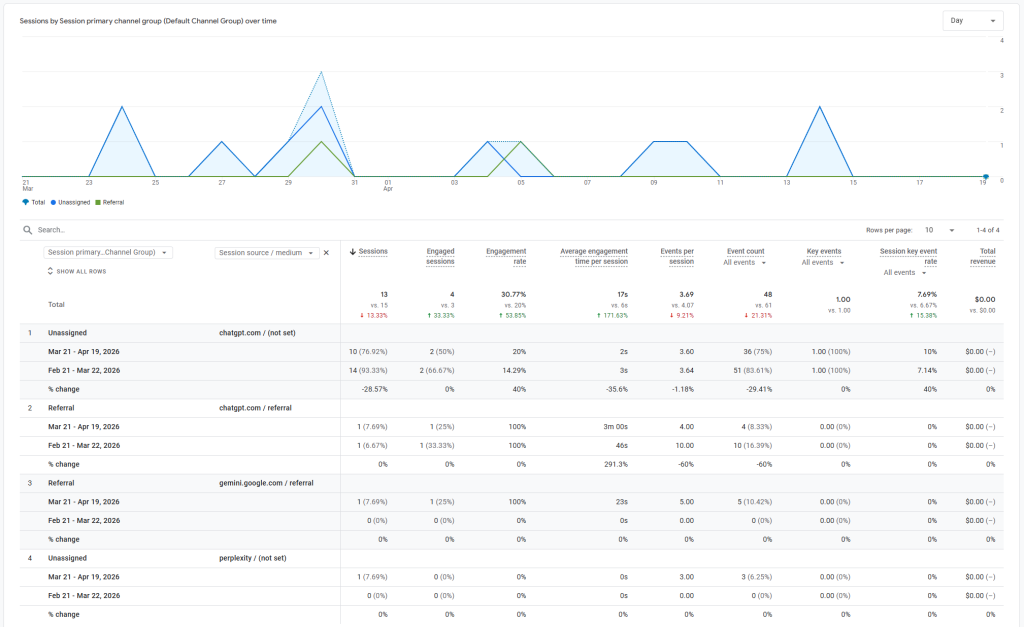
- Referral traffic from AI tools. Check your GA4 traffic sources for chat.openai.com, perplexity.ai, claude.ai, and gemini.google.com. If you start getting visits from these domains, you’re getting cited. The volume is small right now, but the trend is what matters.
- Your own call and form tracking. We’re starting to see leads mention “I asked ChatGPT and it suggested you” on discovery calls. Train your intake team to ask every lead “how did you hear about us,” and log the answer. It’s the one attribution signal that actually ties AI citations to revenue, and it costs you nothing.
The part where we tell you who this doesn’t work for yet
Nothing we’ve written above works in 90 days. We’ve seen the first meaningful movement happen around the four to six month mark, with real pipeline contribution closer to nine months in. If your marketing timeline is “we need leads this quarter,” GEO is not your lever. Keep running Google Ads, fix your landing pages, and revisit AI ranking once the foundations are in place.
It also matters less if your business serves a vertical where AI search adoption is still low. National B2B SaaS buyers are using ChatGPT constantly for research right now. Someone looking for an emergency plumber at 11pm on a Saturday is still Googling. Both of those will change, but the urgency differs. Think about where your buyers actually are.
And it’s worth saying out loud: the models change, constantly. What’s ranking in ChatGPT today may not rank in the next major release. Anyone promising you a permanent “GEO playbook” is selling something. The durable moves are brand-associated citations and clean technical foundations. Everything else is going to keep shifting.
The one thing to do this week
If you do nothing else after reading this, open your robots.txt and confirm GPTBot, OAI-SearchBot, PerplexityBot, and ClaudeBot are not blocked. Then do one manual prompt test of the three highest-value queries for your business. Note who’s getting cited. That’s your competitive set in AI search. It’s not the same list as the one currently ranking on Google, and that’s the whole point.
The businesses that figure this out in the next twelve months will be the ones that still get found when a meaningful slice of buyer research moves into AI answers. The ones waiting for a clean, 10-step checklist will get there two years late.
